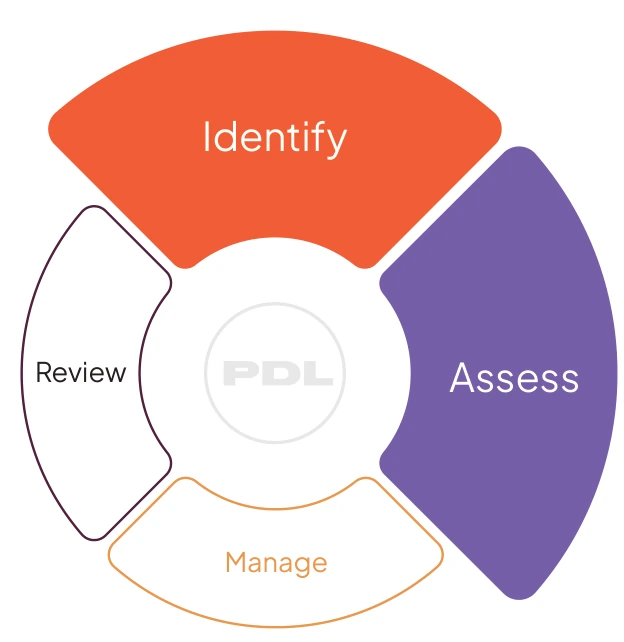
The PDL Risk Management Guide for Pharmacists offers a structured approach to mitigating risk in practice, by addressing four key objectives that make up a Risk Management Cycle.
Pharmacists work within a diverse range of care settings that are rapidly evolving and often operate in demanding, highly complex and busy environments.
These challenging settings require management of patient expectations and need, widening of pharmacists’ scope of practice and integration of new technologies. Additionally, the profession may be impacted by natural disasters, cybersecurity threats and workforce shortages.
Through the broad and expanding range of services that pharmacists provide and contemporary settings in which they work, pharmacists must identify, address and manage many risks. This is important for assuring the safety of patients, the integrity of pharmacy operations, compliance with legal and regulatory standards and a reduction of the risk to the pharmacist’s reputation and registration.
Purpose
Every pharmacist has faced a moment of doubt or realisation during their practice that might have led to a near miss or incident. If you have ever been worried about an event that may compromise patient safety or put your registration at risk, you're not alone. In today’s complex and highly visible healthcare environment, where pharmacists are balancing a fast-paced environment, patient needs, compliance obligations and constant scrutiny, managing risk is not optional — it’s essential.
This guide is designed not just to inform, but to empower. Through real-world case scenarios, practical tools and reflective activities, it is demonstrated how proactive risk management can become second nature — and why it is critical to both patient safety and professional confidence.
Risk Management Cycle
IdentifyPinpoint areas within your practice where potential risks or harm may occur.
AssessEvaluate the severity and urgency of required actions, using the tools outlined in the Guide.
ManageImplement and maintain effective systems and processes within your practice.
ReviewReflect upon and evaluate outcomes from implemented changes.
PDL’s vision to be the leading organisation for pharmacists’ professional risk management includes supporting pharmacists to build capacity in managing their own systems and processes more safely and effectively, regardless of role. The PDL Risk Management Guide for Pharmacists offers a structured approach to mitigating risk in practice, by addressing four key objectives that make up a Risk Management Cycle.
This Risk Management Cycle will be referenced throughout the document, helping pharmacists to foster professional accountability and develop an ongoing Continuous Quality Improvement (CQI) process in their daily activities. The principles in this document offer practical guidance to pharmacists in any practice setting.
Intended audience
This publication is widely applicable and may be relevant to pharmacists in various roles. The following categories are matched with potential learning opportunities to help readers identify how this document can align with professional needs.
Audience
How they may benefit
Pharmacy students and provisionally registered (intern) pharmacists
Use it as a professional development resource to build risk management skills and clinical acumen.
To prepare for safer and considered practice.
Early career pharmacists
Use it as a professional development resource to enhance critical thinking and problem-solving skills.
Experienced professionals
Incorporate it into CQI efforts, such as addressing skill gaps, updating staff training, or ensuring compliance with qualifications.
Pharmacists post-incident
Employ it as a reflective practice activity to review incidents and demonstrate commitment to remedial action.
Managers and pharmacy owners
Use it to identify and mitigate risk as part of robust clinical and business governance frameworks.
Banner groups
Implement and standardise its use across pharmacies to ensure consistent delivery of safe and effective professional services.
Using the guide
Each module consists of the following components.
Introduction & learning objectives
Each module will outline the intended objectives and the anticipated outcomes for the user.
Foundations
This part constitutes the main content of each section, focusing on the key principles and theories.
Case studies
These case studies are not specific to any pharmacist or pharmacy but are a combination of common scenarios reported to PDL. These real-world examples are designed to provide you with context and insights into how to improve practice.
Key takeaways
These handy bullet points at the end of each section offer concise takeaway messages that summarise key content. They highlight the key points from the section.
Activity
Certain sections include a practical, hands-on exercise that demonstrates how the concepts can be applied in the workplace.
Recommended reading
Additional resources are provided for PDL members who wish to further explore and expand their knowledge on specific topics.
PDL resources may be accessed via the Appendix section on page 87.
PDL recommends reading the modules in sequence, but readers can select and focus on those most relevant to achieving their personal learning goals.
This module is designed to equip you with basic knowledge and concepts to begin fostering a risk mindset. It addresses the IDENTIFY and ASSESS components of the Risk Management Cycle.
Identify
Assess
Accreditation Number: A2507PDL1
This activity has been accredited for 1.5 hours of Group 1 CPD (or 1.5 CPD credits) suitable for inclusion in an individual pharmacist’s CPD plan.
The 2016 Competency Standards addressed by this activity include: 1.1, 1.2, 1.3, 1.4, 1.5, 1.6, 2.2, 2.3, 2.4, 3.1, 4.1, 4.2, 4.3, 4.7
Accreditation expires: 30/6/2027
Module 2: Applying risk principles in practice
This module builds upon the foundational concepts introduced in Module 1, helping readers to develop a more holistic approach to assessing risk and providing a structure to support the implementation of effective systems and processes. It addresses the ASSESS and MANAGE components of the Risk Management Cycle.
Assess
Manage
Accreditation Number: A2507PDL2
This activity has been accredited for 1.5 hours of Group 1 CPD (or 1.5 CPD credits) suitable for inclusion in an individual pharmacist’s CPD plan.
The 2016 Competency Standards addressed by this activity include: 1.3, 1.6, 2.1, 2.2, 2.3, 2.4, 3.1, 4.2, 4.3, 4.5, 4.6, 4.7
Accreditation expires: 30/6/2027
Module 3: Managing incidents
This module will guide you through the steps that follow a near miss or incident in your practice. It will help you understand the processes following an incident, implement measures for yourself and others to minimise risk of further adverse events, and develop effective reflective practices to support continuous learning and improvement. It addresses the MANAGE and REVIEW components of the Risk Management Cycle.
Manage
Review
Accreditation Number: A2507PDL3
This activity has been accredited for 1.0 hour of Group 1 CPD (or 1.0 CPD credit) suitable for inclusion in an individual pharmacist’s CPD plan.
The 2016 Competency Standards addressed by this activity include: 1.3, 1.6, 2.1, 2.3, 2.4, 4.1, 4.2, 4.3, 4.6
Accreditation expires: 30/6/2027
Module 4: Managing high-risk areas
This module brings together all four components of the Risk Management Cycle, illustrating how each stage could be applied in real-world practice. It targets five key risk areas commonly associated with incidents. Readers will also be encouraged to recognise the risk principles in this document and apply them to emergent areas in pharmacy, to minimise the impact of potential risks.
Identify
Assess
Manage
Review
Accreditation Number: A2507PDL4
This activity has been accredited for 1.5 hours of Group 1 CPD (or 1.5 CPD credits) suitable for inclusion in an individual pharmacist’s CPD plan.
The 2016 Competency Standards addressed by this activity include: 1.1, 1.2, 1.3, 1.4, 1.5, 1.6, 2.3, 2.4, 3.1, 4.2, 4.3, 4.4, 4.7
Accreditation expires: 30/6/2027
Introducing the Guide
The PDL Risk Management Guide for Pharmacists offers a structured approach to achieving four key objectives:
Objective 1:
Identify
Pinpoint areas within your practice where potential risks or harm may occur.
To proactively assess potential risks during all professional activities
To demonstrate leadership and accountability as part of your role in good clinical governance
Objective 2:
Assess
Evaluate the severity and urgency of required actions, using the tools outlined in the Guide.
To contribute toward a culture of continuous learning (selecting relevant CPD activities)
To leverage incidents and near misses as opportunities for practice improvement
To consider appropriate ways to mitigate and control risk in practice
Objective 3:
Manage
Implement and maintain effective systems and processes within your practice.
To work independently and collaboratively to maintain governance systems to prevent and address incidents
To confidently engage in handling and resolving incidents
Objective 4:
Review
Reflect upon and evaluate outcomes from implemented changes.
To develop reflective practice and self-directed learning to minimise risk of incidents and repeat incidents
To review and adjust your own practices, following near misses or incidents
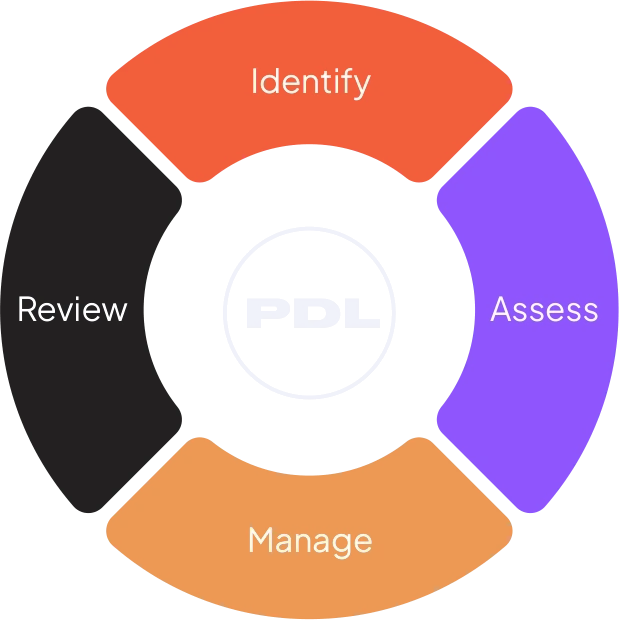
Risk Management Cycle
Together, these four elements form an ongoing Risk Management Cycle.
Figure 1:Risk Management Cycle
This simple process ensures that the pharmacist “takes responsibility and is accountable for their own actions and decisions, and for the team they manage”1, as depicted in the PSA Professional Practice Standards. Having a Continuous Quality Improvement (CQI) process front-of-mind helps to achieve this.
Following these steps can help pharmacists to foster professional accountability, ensure ongoing compliance and enhance operational efficiency — essential components in delivering high-quality, person-centred care.
Background and purpose
About PDL
PDL is Australia’s largest member-based pharmacist organisation and was established in 1912. The organisation is independent, member-owned and the most preferred professional indemnity insurance provider for Australia’s pharmacists.
Our vision is to be the organisation of choice for pharmacists’ professional risk management, and we are continually seeking ways to give pharmacists security and peace of mind throughout their professional life.
Our values
Dependable
Reliable and useful
Responsive
Anticipating; reacting quickly and positively
Supportive
Helping each other, without judgement
Integrity
Independent, respectful and trustworthy
Member centric
Unique and high-quality service, with members at the core of what we do
We aim to help pharmacists build capability in effectively managing their own systems and processes, regardless of their role, and demonstrate strong self-leadership and governance to recognise and mitigate risk in practice.
Our five core values are the driving force behind all that we do.
The PDL Risk Management Guide for Pharmacists has been created to align with our vision and purpose of supporting pharmacists to cultivate a strong mindset for risk awareness and reporting. As the leading provider of professional indemnity insurance and a trusted authority in risk management for the profession, we are committed to equipping our members with the knowledge they need to practise confidently and safely.
The Australian healthcare system
The Australian healthcare system faces complex challenges that can influence patient experiences and expectations, the delivery of services and the quality of care provided.2
Some examples of the challenges include2,3:
Changing consumer behaviour: reduced loyalty to organisations and service providers, increased expectations to have personalised services, increased digital literacy and heightened awareness of individual rights and public health stances.
Digital health technologies: innovative, new technologies have the power to strengthen shared data systems and improve healthcare delivery, but not all healthcare providers and patients have the same level of access and experience with digital technologies.
Ageing population and chronic conditions: life expectancy in Australia continues to grow, and the proportion of people living with at least two chronic conditions rises. This increases the demand for services from multiple healthcare providers and requires an understanding of the diversity of healthcare needs and the burden of disease on the lives of patients.
The pharmacy workforce exists within this broader system to facilitate and improve health outcomes for Australian communities through the implementation and delivery of pharmaceutical knowledge and systems within their practice.4 Pharmacists and pharmacy staff can deliver healthcare within a diverse range of primary, secondary and tertiary care settings, often operating in demanding, highly complex and busy environments. While medication dispensing is a core activity for many pharmacists, the use of their medication management expertise is not limited to just a dispensing function. Pharmacists delivering primary health care offer a wide range of professional services within their continually expanding scope of practice.
Well-known examples of pharmacist scope of practice activities include services such as administering vaccines and other medicines by injection, preparing dose administration aids, compounding medicines, working collaboratively as part of an allied healthcare team, assessment and treatment of minor ailment and supply of certain Schedule 4 medicines via protocol-based prescribing. Pharmacists undertake these activities while having the highest regard for patient safety and promoting quality use of medicines.
Recognising the challenges facing the Australian healthcare system — and, by extension, the pharmacy profession — underlines the need to evolve models of care and the nature by which pharmacists practise.
Clinical governance and the responsibility of the individual
The pharmacy landscape poses many potential risks which pharmacists must navigate and balance as healthcare providers. These include patient safety issues, medication-related errors, operational issues, and legal and ethical obligations.
As such, effective risk management is a non-negotiable component of pharmacy practice. The PDL Risk Management Guide for Pharmacists offers a structured means to support pharmacists in mitigating risk in practice as best they can, thereby improving patient safety, the integrity of pharmacy operations, compliance with legal and regulatory standards, and reducing professional and reputational risk to the individual practitioner.
There are governance systems in place, existing as part of a large and complex healthcare system, to ensure that patients and consumers receive safe and quality health care.5 Pharmacists’ individual responsibility to identify, assess, and manage risk falls within one such governance system; a clinical governance framework, and applies to the scope of services that each pharmacist provides.
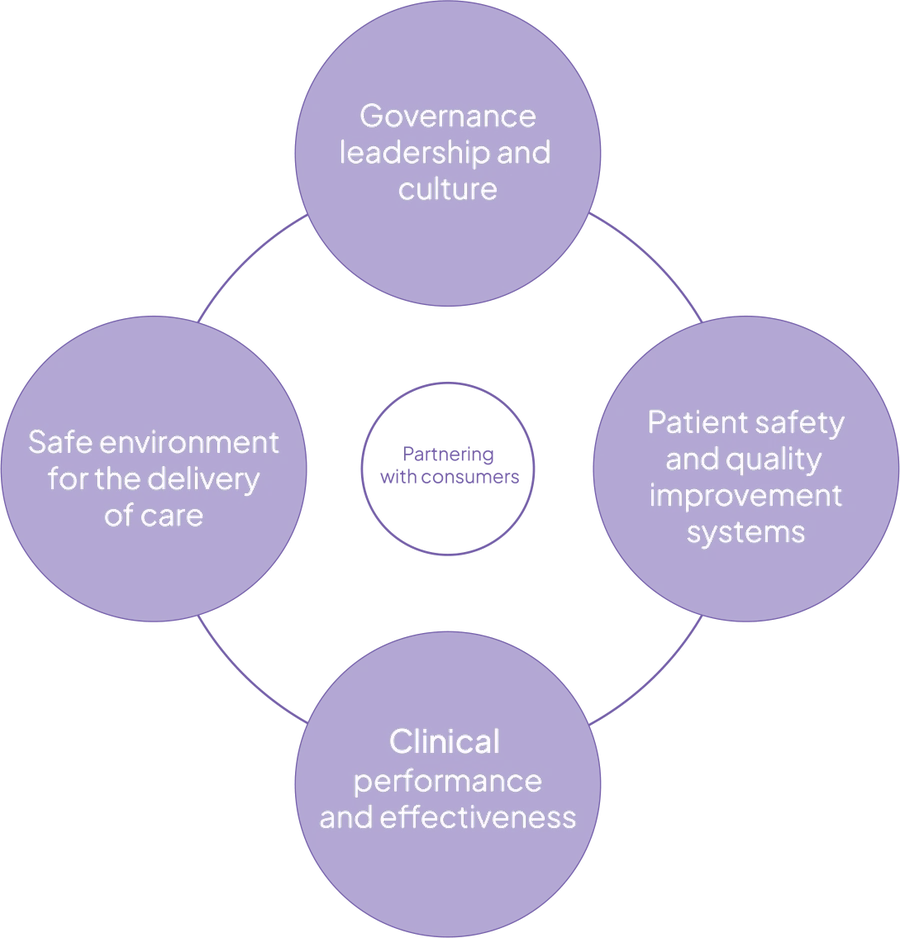
The National Model Clinical Governance Framework, developed by the Australian Commission on Safety and Quality in Health Care (ACSQHC)6 defines Clinical Governance as:
…a complex set of leadership behaviours, policies, procedures, and monitoring and improvement mechanisms that are directed towards ensuring good clinical outcomes.
National Model Clinical Governance Framework
Figure 2:National Model Clinical Governance Framework, Australian Commission on Safety and Quality in Health Care (ACSQHC)
The principles of clinical governance hold an expectation from staff members at all levels of employment within a health service organisation to maintain accountability for their individual roles to continuously improve the quality of health services provided and safeguarding high standards of care.7 This ensures that everyone — from the newest frontline pharmacy staff (students, interns) to members of governing bodies and boards — utilises their skills and expertise within their capacity to meet these accountabilities.
Clinical risk management is part of an overall good clinical governance system. The overarching focus of a good clinical governance system is to minimise risks and harm to patients. As such, pharmacists need to ask the following questions as a first step to developing a risk mindset:7
What can and does go wrong?
What factors influence this?
What are you doing to prevent risks or recurrence of adverse events?
What is the outcome of an adverse event, and what have you learned?
How are you monitoring risks?
The table below provides an overview of some key roles in the pharmacy and their contributions to clinical governance. Additional roles and their responsibilities will be examined in detail later in Module 2.
Table 1:Actions that can be taken in the pharmacy to address clinical governance, as adapted from the PSA Clinical Governance Principles for Pharmacy Services8
Role
Accountabilities
Pharmacy owner or manager
Oversight of activities of employee pharmacists, provisionally registered pharmacists (interns) and assistants
A strong and safe culture instilled from owners and management to all staff
Business professional indemnity insurance and business continuity plans are in place
Suitably qualified staff are present and available to meet service needs
Resources to allow the team to provide all services in a safe and efficient manner
Occupational health and safety protocols in place to ensure a safe environment for staff and patients
Consulting rooms meet professional standards for the services being offered
Pharmacist or provisionally registered (intern) pharmacist providing clinical services
The use of evidence-based information in your patient interactions
Identify and act on opportunities for quality improvement in the provision of health services and one’s own professional development
Uphold pharmacist standards, codes and guidelines applicable to their scope of practice
Reporting to management when technology or any part of a process fails
Adhere to organisational policies, procedures and systems
Report and monitor any incidents and near misses
Reporting and documentation obligations are met
Module 1: Understanding risk in pharmacy practice
Introduction & learning objectives
Objective 1:
Identify
Pinpoint areas within your practice where potential risks or harm may occur.
To proactively assess potential risks during all professional activities
To demonstrate leadership and accountability as part of your role in good clinical governance
Objective 2:
Assess
Evaluate the severity and urgency of required actions, using the tools outlined in the Guide.
To contribute toward a culture of continuous learning (selecting relevant CPD activities)
To leverage incidents and near misses as opportunities for practice improvement
To consider appropriate ways to mitigate and control risk in practice
Risk Management Cycle
This module is designed to equip you with basic knowledge and concepts to begin fostering a risk mindset.
After completing this module, pharmacists should be able to:
Explain the importance of having a proactive risk management mindset.
Describe the fundamental elements that comprise a pharmacist risk mindset and how each translates into practice.
Recognise your own approach to risk and how that affects your practice.
Describe the five predominant risk categories encountered in pharmacy practice and appreciate the intersection between them in many cases.
The rest of the guide
This review draft covers pages 5 to 15 of the guide: the Executive summary, Introducing the Guide and the opening of Module 1. Modules 2 to 4 and the Appendix are in the PDF.



 Introduction & learning objectives
 Foundations
 Case studies
 Key takeaways
 Activity
 Recommended reading